
How LED Lashing Reduces Chair Time — The Real Numbers

One of the most consistent things we hear from artists after they've been UV lashing for a few months: "My sets are just faster now."
Not dramatically, obviously different — just consistently, quietly faster. Every set. Over time, that adds up to something meaningful. But most artists don't stop to calculate exactly how much time they're recovering, or what that time is actually worth to their business.
Let's do that math.
Where the Time Actually Goes in Traditional Lashing
To understand where UV lashing saves time, you have to understand where traditional lashing loses it.
Traditional cyanoacrylate adhesive cures with moisture. That means cure time is variable — it depends on your ambient humidity, temperature, and how well you've calibrated your environment that day. On a dry day you might be waiting 2–3 seconds per extension for a solid bond. On a humid day you might be rushing to prevent fall out. Either way, the adhesive is the variable, not just your hands.
That variability means:
— You spend mental energy managing the environment (humidifier, hygrometer, adjusting technique)
— You occasionally pause to let bonds fully set before moving to adjacent lashes
— You may use a nano mister at the end to fully cure remaining bonds
— You have an entire setup and breakdown around environmental management tools
None of this is huge on its own. But it adds friction throughout the service.
Where UV Lashing Removes That Friction
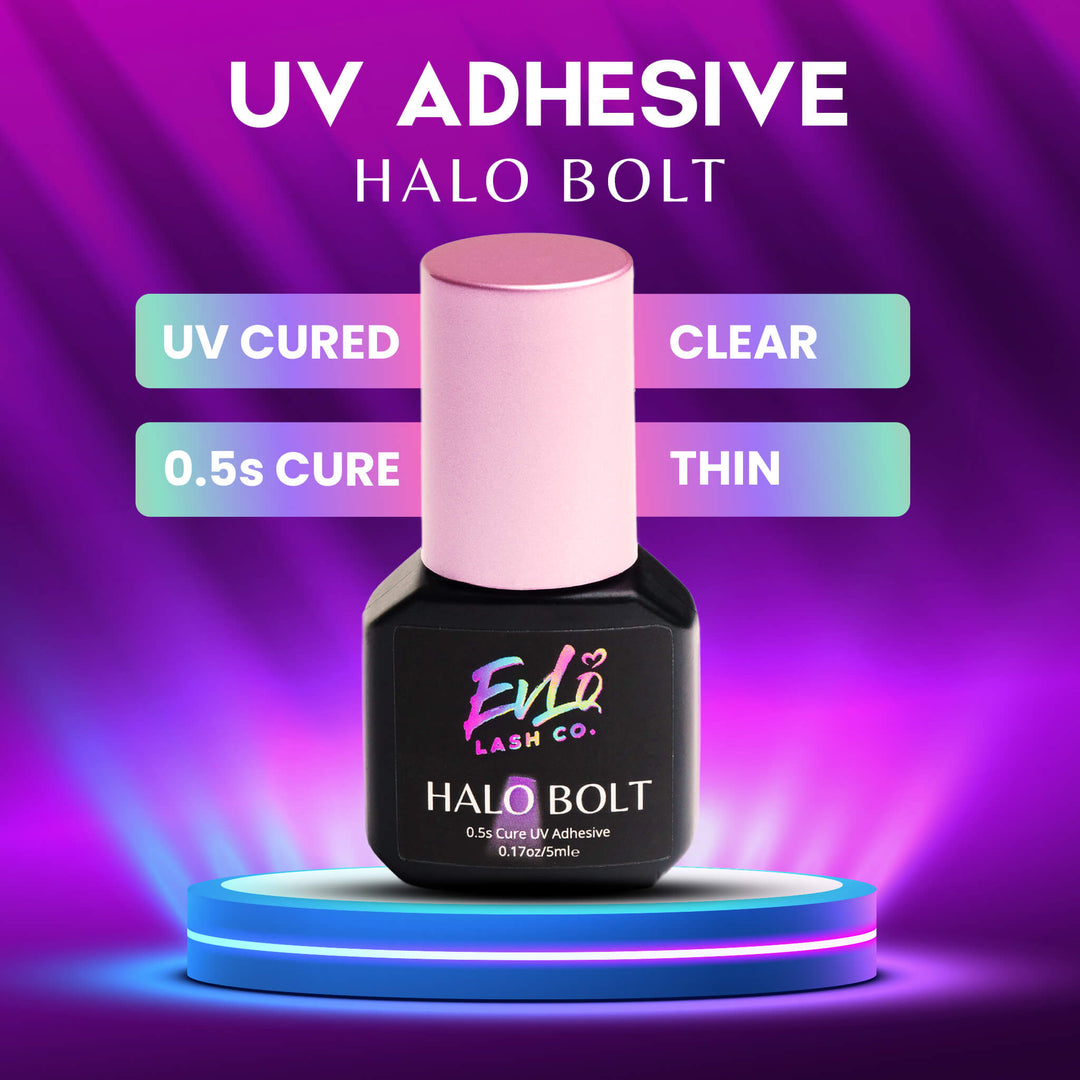
UV adhesive cures by light, not moisture. The bond sets in 0.3–2 seconds depending on your formula — the moment you trigger the foot pedal, it's done. No waiting. No variability. No environmental management.
That means:
— Zero setup time for environmental tools
— No mid-service pauses to let bonds set before working nearby
— No nano mister at the end
— Consistent cure time whether it's humid in August or dry in January
— Less mental overhead managing variables that don't exist anymore
The foot pedal eliminates the hand movement of picking up and putting down a curing wand. The instant bond means you move through the lash map without interruption.
What Artists Actually Report
In informal feedback from artists who've made the switch, a consistent pattern emerges: full sets tend to run about 10–20 minutes shorter than their pre-UV baseline, once they've been UV lashing for a few months and have settled into their rhythm.
What 15 Minutes Per Set Is Actually Worth
Let's use a conservative 15-minute reduction per set and run the numbers for a full-time lash artist.
If you're doing 5 sets per day, 5 days per week:
- 15 minutes × 5 sets = 75 minutes recovered per day
- 75 minutes × 5 days = 6.25 hours recovered per week
- 6.25 hours × 50 weeks = 312 hours recovered per year
At an average lash service price of $120 and a 2-hour appointment, you're recovering enough time to do roughly 156 additional sets per year — potentially $18,720 in additional revenue capacity. Or it's 312 hours back to yourself, which has its own value.
The Setup Time You Get Back
There's one more time savings that's easy to overlook: setup and breakdown. When you're not managing a humidifier, hygrometer, nano mister, and the rituals around keeping your adhesive in its optimal cure window — your setup is simpler and your breakdown is faster.
The Short Version
UV lashing saves time in multiple places: the cure itself, the environmental management you no longer need, and the mental overhead that comes with variable-cure adhesive. For most artists who make the switch, the cumulative effect is 10–20 minutes per set once they've found their rhythm.
Across a full year of lashing, that time adds up to something real. Whether you use it to grow your revenue, protect your schedule, or just feel less rushed — it's time that's genuinely yours.


Laissez un commentaire