
Does Refrigerating UV Adhesive Actually Extend Its Shelf Life?

If you've ever Googled “how to store UV lash glue,” you've probably seen two very different answers. Some artists swear by the fridge. Others say it's the worst thing you can do.
The truth is more specific than either side usually admits — and getting it right makes a real difference in how your adhesive performs from the first use to the last.
But here's what most people miss: the answer depends entirely on whether the bottle is opened or unopened.
What Actually Degrades UV Adhesive
UV adhesive is still cyanoacrylate based. That means two things are working against it from the moment you open it: moisture and light.
Moisture is the biggest everyday threat once the bottle is opened. Cyanoacrylate polymerizes — or cures — when it contacts moisture. This is what happens intentionally at the lash bond, but it's also what can happen unintentionally inside the bottle over time. Every time you open and close the cap, trace amounts of humidity enter. Over weeks, that exposure can gradually degrade the formula.
Light is the second threat — and this is where UV adhesive differs from traditional formulas. UV-cured adhesive contains a photoinitiator that activates when exposed to the right wavelength of light. Sustained exposure to UV or certain strong visible/blue-violet light sources can prematurely trigger that initiator, which is why UV adhesives should always be stored away from windows, direct sunlight, bright work lights, and your UV curing light.
Unopened Bottles: Yes, the Fridge Helps
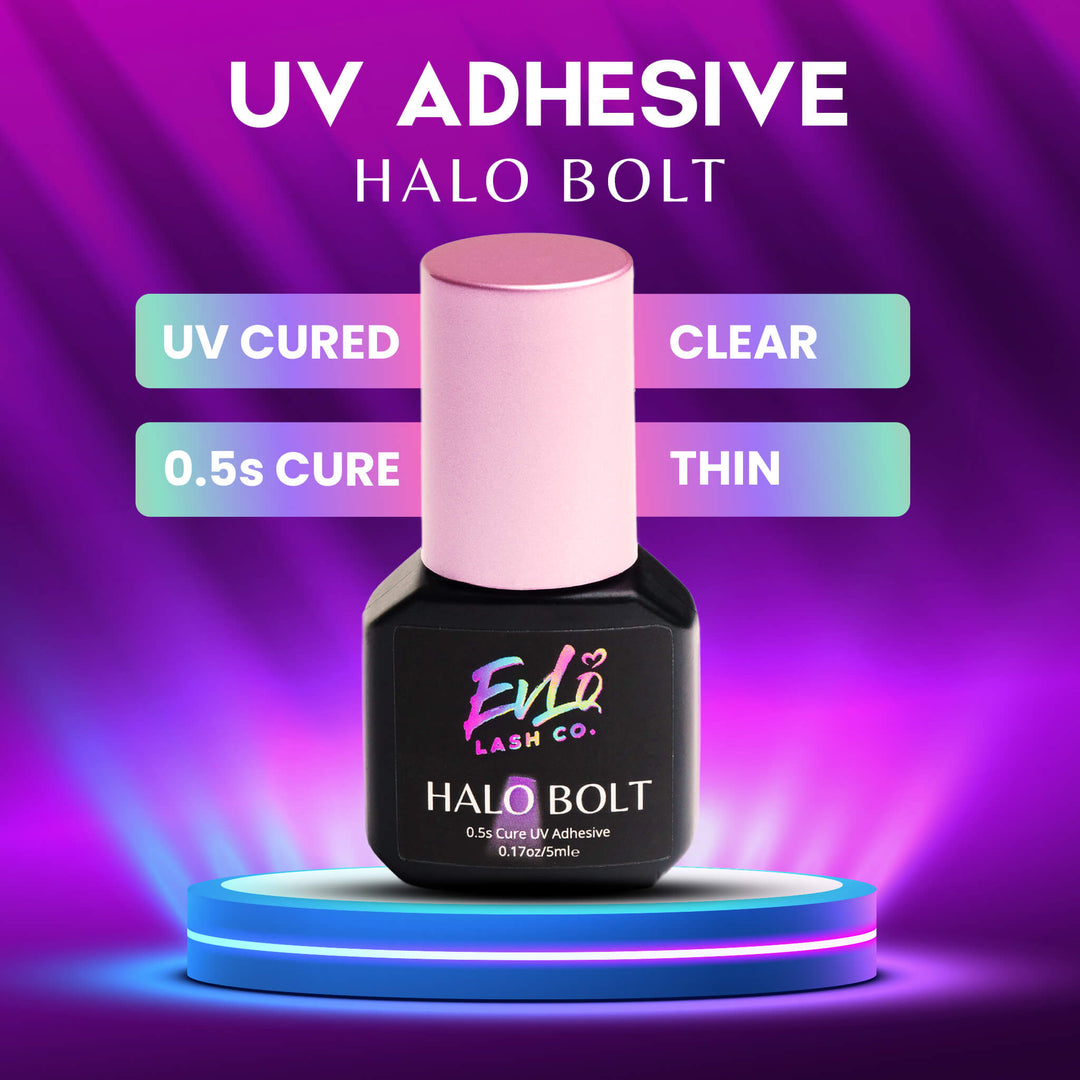
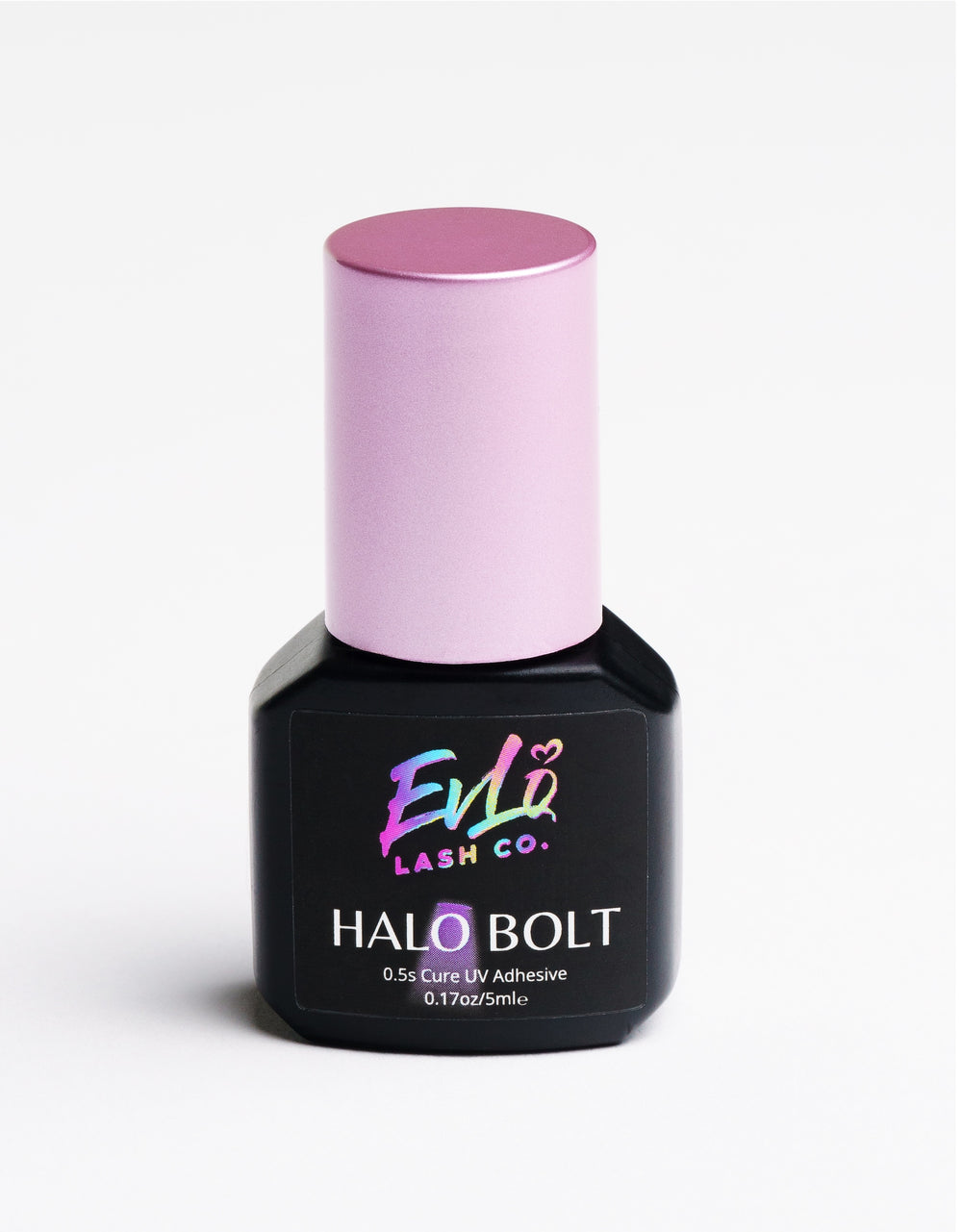
Based on our storage testing, refrigerating Halo UV adhesives in their original sealed, vacuum-packaged state can help extend unopened shelf life by approximately 2 to 3 months.
This is meaningful if you stock multiple bottles, buy in larger quantities, or want to maintain a longer-term supply without compromising formula quality before you even break the seal.
The key word is sealed. The vacuum-sealed inner packaging we added to our Halo UV adhesives helps protect the bottle from humidity and environmental exposure during storage and shipping. As long as that inner seal is intact, refrigeration works in your favor — cool temperatures help slow the chemical aging process without introducing the same risks that come with refrigerating an opened bottle.
One important rule: always let the bottle come fully to room temperature before you open it. Give it at least 30 to 60 minutes out of the fridge before breaking the seal. Opening a cold bottle in a warm room can cause condensation, which would immediately counteract the benefit of storing it cold in the first place.
Opened Bottles: Skip the Fridge
Once you've opened your adhesive, the calculation changes completely.
Every time you use the bottle, you introduce trace humidity from the air. The formula is already in active use, and the sealed-environment benefit that made refrigeration useful no longer applies. What you're left with is the condensation risk — and that's a real problem.
When you take a cold bottle out of the fridge and open it in a warm room, moisture can condense at the tip, around the cap area, and near the surface of the adhesive. That is the exact thing you're trying to protect against. If the bottle is opened before it reaches room temperature, you can accelerate the degradation you were trying to prevent.
For an in-use bottle, cool room-temperature storage is the right call — not the fridge.
What We Recommend for Opened Bottles
The goal is simple: keep your in-use adhesive away from moisture, light, and temperature swings.
Store it in a cool, dark place — a drawer, cabinet, or opaque pouch works well.
Keep the cap tight between uses and wipe the tip clean before closing.
Avoid storing it near your UV light, a sunny window, bright work lights, or any heat source.
Replace it on schedule. Once opened, our Halo adhesives are formulated to perform best within a 3-month use window.
The Short Answer
Refrigerating UV adhesive is a real strategy — but only for bottles that haven't been opened yet.
For unopened, vacuum-sealed Halo UV adhesives, refrigeration can help extend shelf life by about 2 to 3 months based on our storage testing. Just make sure to let the bottle warm to room temperature before you open it.
For bottles already in use, keep them at cool room temperature in a dark spot and skip the fridge entirely. Simple, consistent storage is what keeps your formula performing the way it should.


Laissez un commentaire